
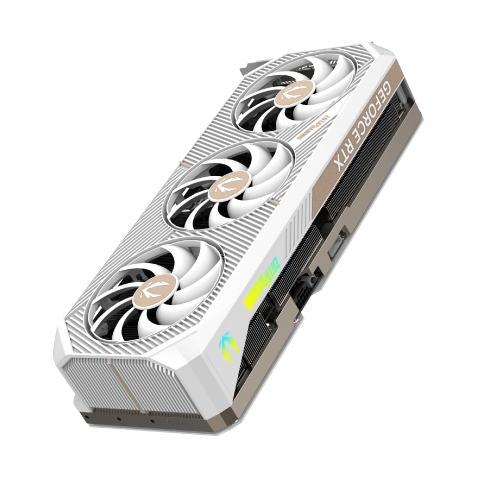
When choosing a high-performance gaming PC, the graphics card plays the biggest role in determining overall performance. Two popular GPUs in NVIDIA’s latest generation are the GeForce RTX 5070 and the RTX 5090.
Both are built on NVIDIA’s newest architecture and support modern features like ray tracing, DLSS upscaling, and AI-accelerated graphics, but they target very different users and budgets.
In this guide, we compare RTX 5070 vs RTX 5090 performance, specs, gaming benchmarks, and value so you can decide which GPU belongs in your next gaming PC.
RTX 5070 vs RTX 5090 – Quick Overview
| GPU | Target User | Performance Tier | Typical Price |
|---|---|---|---|
| RTX 5070 | High-end gamers | 1440p gaming / entry-level 4K | $549 MSRP |
| RTX 5090 | Enthusiasts & creators | High-refresh 4K gaming | $1599+ MSRP |
The RTX 5070 is designed to deliver excellent gaming performance at a more accessible price, while the RTX 5090 represents NVIDIA’s flagship GPU built for maximum performance and future-proofing.
Architecture & Technology
Both GPUs belong to NVIDIA’s latest generation of graphics cards and support:
Ray tracing acceleration
DLSS frame generation
AI-accelerated rendering
PCIe 5.0 support
GDDR7 memory technology
The RTX 50-series GPUs are built using advanced manufacturing processes and represent NVIDIA’s next step in gaming and AI graphics performance.
However, the RTX 5090 is designed with significantly more compute power and memory bandwidth, enabling it to handle much more demanding workloads.
Performance Comparison
The biggest difference between these two GPUs is raw performance.
In most gaming and professional workloads, the RTX 5090 can deliver 30-50% higher performance than the RTX 5070, especially at higher resolutions or with ray tracing enabled.
RTX 5070 Performance
The RTX 5070 is ideal for:
1440p ultra settings gaming
Entry-level 4K gaming
Competitive esports titles
Streaming and content creation
It provides excellent performance for gamers who want high frame rates without paying flagship prices.
RTX 5090 Performance
The RTX 5090 is designed for extreme performance including:
4K ultra gaming
240Hz high-refresh monitors
advanced ray tracing
AI and machine learning workloads
3D rendering and professional production
With significantly more CUDA cores and VRAM, the RTX 5090 can handle much larger projects and higher resolutions.
VRAM & Memory
Memory capacity is another major difference between these GPUs.
| GPU | VRAM | Memory Type | Best Use Case |
|---|---|---|---|
| RTX 5070 | 12 GB | GDDR7 | 1440p gaming |
| RTX 5090 | 32 GB | GDDR7 | 4K gaming & AI workloads |
The RTX 5090 has dramatically more memory capacity and bandwidth, which is important for:
4K gaming
high-resolution textures
3D rendering
AI models
large creative workloads
In many benchmarks, the RTX 5090 offers over 160% more VRAM capacity, making it much better suited for demanding workloads.
Gaming Performance
1080p Gaming
Both GPUs deliver extremely high frame rates.
At this resolution the RTX 5070 already performs exceptionally well, so the RTX 5090’s extra power is often unnecessary unless targeting extremely high refresh rates.
1440p Gaming
This is where the RTX 5070 shines.
You can expect:
Ultra settings in most modern games
High refresh rates
Smooth ray tracing performance with DLSS
For many gamers, the RTX 5070 provides the best balance of performance and value.
4K Gaming
For 4K gaming, the RTX 5090 pulls ahead significantly.
Its extra compute power allows it to:
maintain higher frame rates
run ray tracing at maximum settings
support high-refresh 4K displays
If you want the ultimate 4K gaming experience, the RTX 5090 is the better choice.
Content Creation & AI Performance
Modern GPUs are also used for creative workloads and AI applications.
The RTX 5090 is significantly better for:
3D rendering
video editing
machine learning
AI model training
large Blender scenes
Because of its higher core counts and memory capacity, it can process complex workloads much faster.
The RTX 5070 can still handle creative tasks but is better suited for lighter workloads.
Power Consumption
High performance requires more power.
| GPU | Power Consumption | Recommended PSU |
|---|---|---|
| RTX 5070 | ~250W | 750W PSU |
| RTX 5090 | ~575W | 1000W+ PSU |
The RTX 5090’s enormous performance comes with much higher power requirements and cooling demands.
When building a system around the RTX 5090, a high-quality power supply and cooling solution are essential.
Price & Value
One of the biggest differences between these GPUs is price.
RTX 5070 – around $549 MSRP
RTX 5090 – around $1599+ MSRP
The RTX 5070 offers much better performance-per-dollar, making it ideal for most gamers.
The RTX 5090 is targeted at enthusiasts who want the absolute best performance regardless of cost.
RTX 5070 vs RTX 5090 – Which One Should You Choose?
Choose the RTX 5070 if you:
✔ Want excellent 1440p gaming performance
✔ Want strong performance without paying flagship prices
✔ Are building a high-end gaming PC on a reasonable budget
Choose the RTX 5090 if you:
✔ Want the best GPU currently available
✔ Plan to play at 4K ultra settings
✔ Work with AI, rendering, or professional workloads
✔ Want the most future-proof gaming PC possible
Build a Gaming PC With the Right GPU
Whether you choose the RTX 5070 or RTX 5090, the rest of your system also matters.
A balanced gaming PC includes:
high-performance CPU
fast DDR5 memory
NVMe storage
quality cooling
reliable power supply
At Infinity Computers, we build custom gaming PCs designed to maximize the performance of modern GPUs.
Checkout our RTX 5070 prebuilt gaming PC and RTX 5090 high-performance build to find the system that matches your performance goals.