
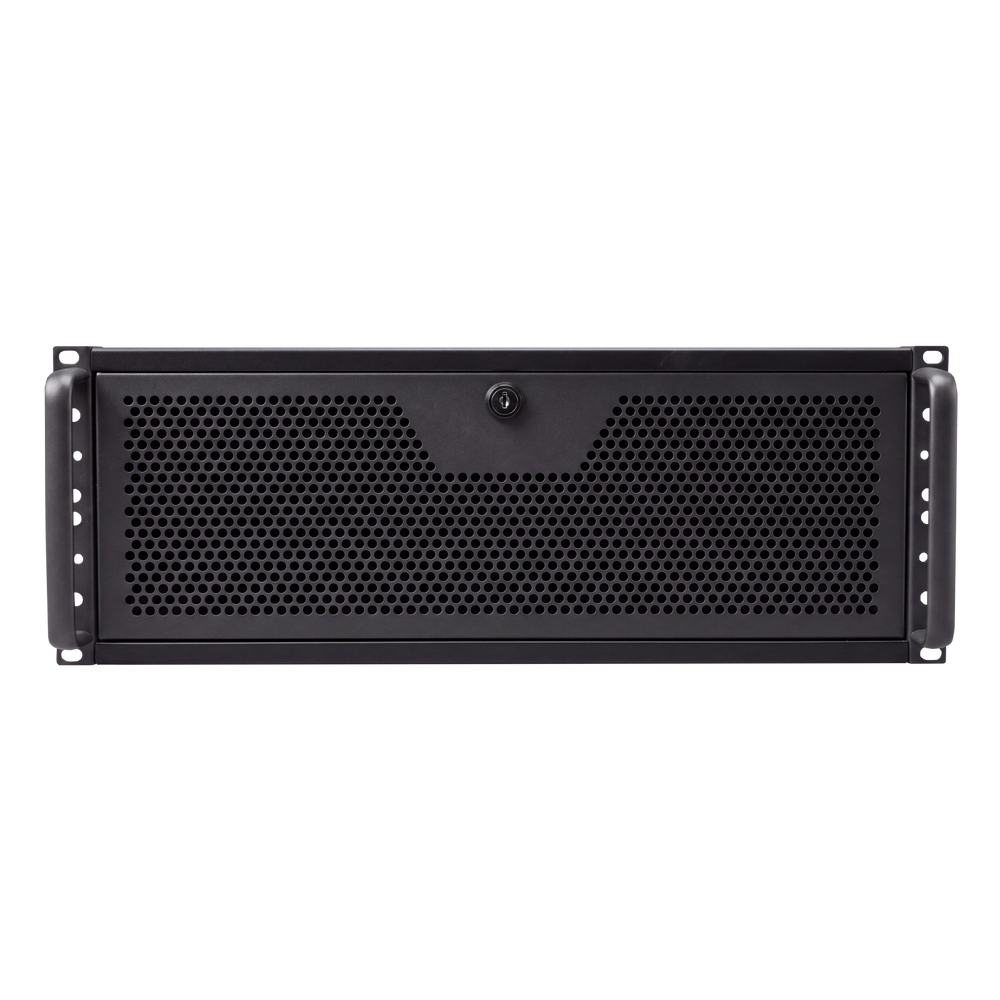
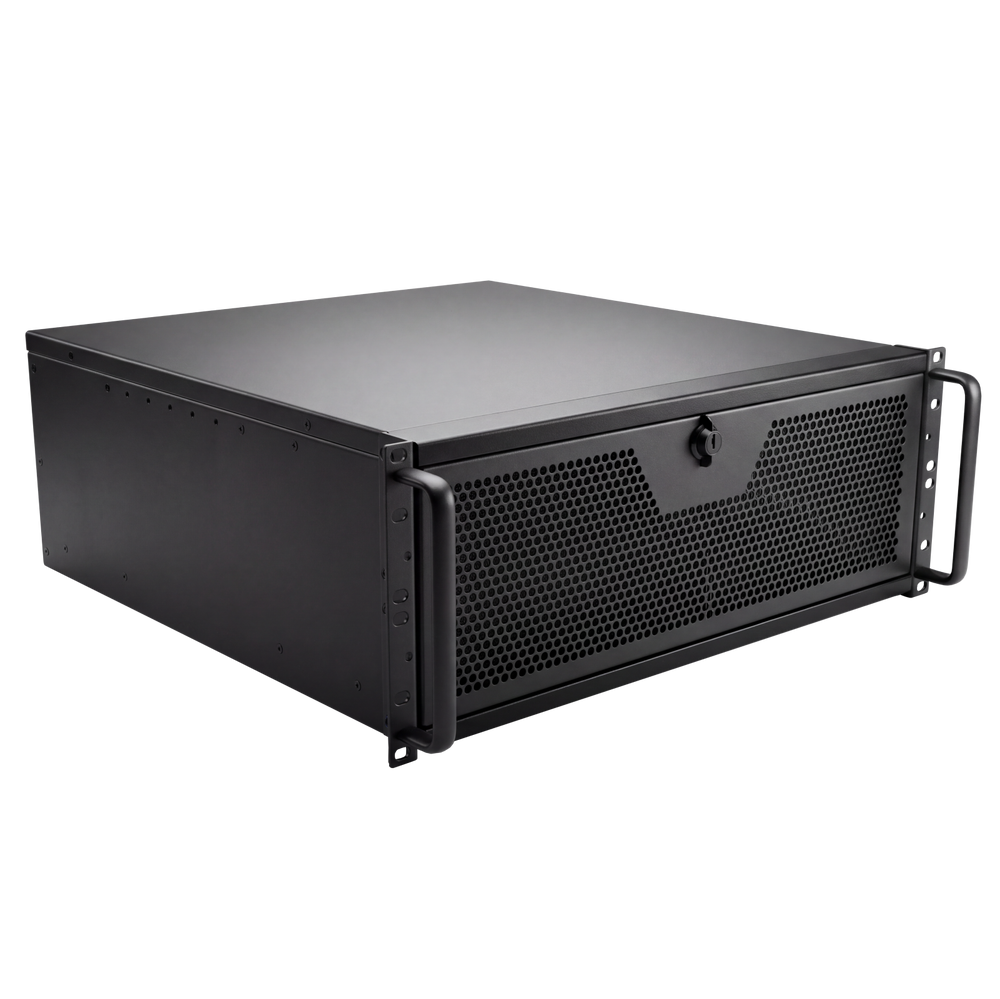
Run office sign-ins, databases, and virtual machines on Infinity Sentinel business servers powered by AMD EPYC. Representative 4U chassis shown.
Powered by
AMD EPYC
16 or 32 cores per host
Standard memory
64–384GB
DDR5 ECC per host
Built-in networking
10 or 25GbE
Link speed depends on model
Sentinel Enterprise
3 nodes
Proxmox VE and Ceph cluster
Move aging office services into separate Proxmox VE virtual machines so each can be maintained and backed up independently. Choose Professional for SQL-backed applications or Remote Desktop on 128GB ECC and a hot-swap SSD pool. Step up to Advanced for 32 cores, 384GB ECC, and dual 25GbE.
What you can run
Size the host around concurrent users, virtual machines, storage performance, and the services that need to come back first.
Run Active Directory, DNS, shared folders, and print queues on Sentinel Essential. Its mirrored 16TB data pool suits an office of roughly 5–25 staff. Put a second domain controller on separate hardware.
Use Proxmox VE to separate services into Windows or Linux VMs. Professional suits a smaller SSD-backed estate. Advanced adds memory and cores for more concurrent guests.
Keep application data on Professional or Advanced enterprise SSDs with power-loss protection. Size the database for memory, write load, and licensing before you order.
Use Professional for a modest Remote Desktop workload or Advanced for multiple session hosts. Capacity depends on concurrent users and their applications. Quote Windows Server and RDS licences separately.
Send image-level backups to separate hardware with Proxmox Backup Server or compatible Veeam tooling. Keep an off-site copy and test restores against your recovery window.
Sentinel Enterprise runs protected VMs across three nodes with Ceph shared storage. Plan for one node out of service, a brief restart during failover, and a separate backup target.
Run office sign-ins, shared files, accounting apps, and databases in Windows or Linux virtual machines. Explore the tools for VM backups, shared storage, and high availability.
Windows Server
Proxmox VE
Sage 50 Accounting
PostgreSQL
Proxmox Backup Server
Veeam Backup & Replication
Ceph
OpenZFS
Sentinel Enterprise gives you three 1U nodes, 96 EPYC cores, and 1,152GB of ECC memory across the cluster. Proxmox VE can restart protected VMs on surviving nodes after one host fails. Ceph provides 11.52TB usable before the planned capacity reserve, and each node has redundant power. Plan off-site recovery separately.
Choose Essential for office infrastructure such as sign-ins, file shares, and print. Professional adds a rack chassis, 128GB ECC, and hot-swap SSDs for line-of-business apps and a smaller VM estate. Advanced has 32 cores and 384GB ECC for consolidation. Choose Enterprise when critical VMs need to restart on surviving hosts after one node fails.
Essential provides 16TB usable on mirrored data drives. Professional starts with 1.92TB usable enterprise SSD storage, and Advanced starts with 3.84TB usable. Enterprise provides 11.52TB usable Ceph storage at three replicas before capacity reserve. The standard configurations also include mirrored 480GB enterprise NVMe boot drives.
Essential is a Micro-ATX tower with a single 850W supply and four of its eight hot-swap bays wired as standard. Professional is a 676.5 mm deep 1U server with redundant 750W supplies. Advanced and each Enterprise node use a 955 mm deep 1U chassis with redundant 1000W supplies. Allow for four-post rails, cooling, and rack-room noise. The photos on this page show a representative 4U chassis.
Advanced includes dual 25GbE SFP28. Enterprise adds dual 10GbE on each node for cluster traffic and uses 25GbE for storage and VM traffic. We confirm rack fit, switches, cabling, optics, and protected power during scoping. The cluster is designed for one site with low latency between nodes.
Sentinel Enterprise can restart protected VMs after a single node fails, so users can experience a brief interruption while services restart. Size the workload to fit on two nodes. With one node down, the three-node cluster runs with reduced redundancy until that node returns. Ask about a fourth node where additional headroom matters.
The standard host is Proxmox VE 9. The first year of Basic is included on Essential, Professional, and Advanced. Enterprise includes one year of Standard per node. Windows Server, SQL Server, CALs, and other application licences are quoted separately. Discuss bare-metal Hyper-V requirements before ordering.
Keep a copy on separate hardware and another off-site. Mirrors and Ceph replicas help protect against certain hardware failures. Use dedicated backup software and tested restores for file deletion, corruption, ransomware, or loss of the site.
Servers are built and tested in Ontario with a 72-hour burn-in, documented configuration, and a remote handover. The Enterprise cluster also gets a node-failover test. All configurations include a 3-year hardware warranty and lifetime technical support. Installation, migration, monitoring, and delivery can be scoped in your quote.
Tell us what you run today, how many people depend on it, and how long you can be offline. We’ll work through the host, storage, networking, licences, and migration with your team before you order.